Tram, Black Line Sign: A Versatile Icon for Modern Urban Design
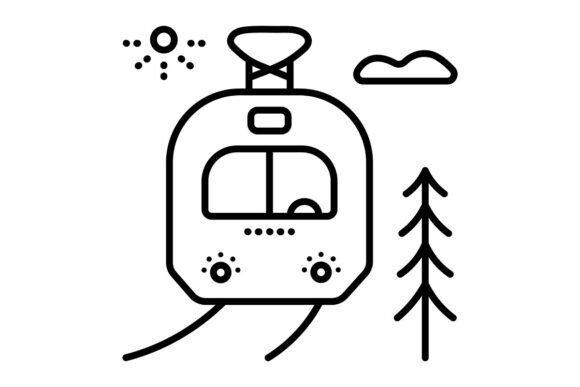
The Tram, Black Line Sign is a minimalist vector icon that captures the essence of urban transit through a clean, monochrome design. It features a simple outline of a city tram, making it an ideal visual element for digital projects that require clarity and consistency. This icon is more than just a symbol—it's a tool that can enhance user experience across various platforms.
Understanding the Tram, Black Line Sign
The Tram, Black Line Sign is designed to represent public transportation in an urban setting. Its minimalistic approach ensures that it remains recognizable even at small sizes, which is crucial for digital interfaces. The icon’s black line style emphasizes simplicity, making it adaptable to different color schemes and backgrounds without losing its visual identity.
Unlike more complex icons, the Tram, Black Line Sign avoids unnecessary details, focusing instead on the essential elements that convey its meaning. This makes it particularly effective for use in apps, maps, and infographics where space is limited and clarity is key.
Key Characteristics and Practical Value
One of the standout features of the Tram, Black Line Sign is its versatility. It can be scaled up or down without compromising quality, ensuring it remains sharp and legible on any device. This makes it suitable for both high-resolution displays and mobile screens.
The icon’s monochrome design also contributes to its flexibility. It can be easily integrated into branding materials, whether the overall palette is dark, light, or neutral. This adaptability is especially valuable for transport companies, travel guides, and city branding initiatives that require a cohesive visual language.
Strengths in Real-World Applications
In practical terms, the Tram, Black Line Sign excels in environments where quick recognition is important. For example, in a mobile app that provides transit information, this icon can help users identify tram routes with ease. Its straightforward design reduces cognitive load, allowing users to focus on the information rather than deciphering the icon.
For web designers and developers, the icon offers a reliable solution for adding visual cues without overcomplicating the interface. It can be used alongside other icons to create a consistent visual system, improving usability and aesthetics.
Quality and Usability Considerations
The Tram, Black Line Sign is crafted with attention to detail, ensuring that it meets industry standards for vector graphics. Its clean lines and proportional structure make it easy to work with in design software, allowing for seamless integration into existing projects.
Usability is another strong point. The icon’s simplicity ensures that it is accessible to a wide audience, including those with visual impairments or limited technical expertise. When paired with text labels, it can serve as an effective communication tool in multilingual environments.
Flexibility and Reliability
When it comes to flexibility, the Tram, Black Line Sign stands out. It can be modified to fit different styles while maintaining its core identity. This makes it a valuable asset for designers who need to maintain a consistent look across multiple platforms or campaigns.
Reliability is also a key factor. The icon’s clean design minimizes the risk of misinterpretation, ensuring that it conveys the intended message consistently. This reliability is especially important in public-facing applications where accuracy and clarity are paramount.
Who Benefits Most from the Tram, Black Line Sign?
The Tram, Black Line Sign is particularly useful for professionals involved in urban planning, transportation design, and digital product development. Transport companies can use it to create branded materials that reflect their commitment to eco-friendly and efficient travel. Railway stations and travel guides can incorporate it into wayfinding systems to improve navigation for passengers.
For digital creators, the icon is a practical choice for websites, apps, and infographics that require clear and concise visual elements. It is also well-suited for educational content that explains public transport systems or urban mobility concepts.
Professional Observations and Recommendations
From a design perspective, the Tram, Black Line Sign is a solid choice for projects that prioritize clarity and consistency. Its minimalist approach aligns with current trends in UI/UX design, where simplicity is often favored over complexity.
However, it’s important to consider the context in which the icon will be used. While it works well in digital environments, it may not be the best option for physical signage where larger, more detailed icons are required. In such cases, additional design considerations may be necessary to ensure visibility and readability.
Long-Term Value and Effectiveness
The Tram, Black Line Sign offers long-term value due to its timeless design and broad applicability. As urban areas continue to evolve, the need for clear and effective visual communication remains constant. This icon is well-positioned to meet that demand across various industries and platforms.
Effectiveness is another key factor. By using the Tram, Black Line Sign, organizations can enhance their visual storytelling and improve user engagement. Whether it’s for a mobile app, a website, or a marketing campaign, the icon serves as a powerful tool for conveying the message of modern, sustainable urban travel.
Final Thoughts on the Tram, Black Line Sign
The Tram, Black Line Sign is more than just a visual element—it’s a functional asset that supports effective communication in digital and urban contexts. Its simplicity, adaptability, and reliability make it a valuable resource for designers, developers, and professionals in the transportation sector.
Whether you’re working on a new app, updating a website, or creating branding materials, the Tram, Black Line Sign offers a practical and elegant solution. By incorporating this icon into your projects, you can enhance clarity, improve user experience, and align with modern design principles that prioritize efficiency and accessibility.