Global Environmental Issues Outline
Understanding global environmental issues is more important than ever. From climate change to deforestation, the challenges facing our planet are complex and interconnected. A Global Environmental Issues Outline provides a structured way to explore these topics, making it easier to communicate, plan, and take action.
This outline is particularly useful when designing educational materials, creating infographics, or developing campaigns aimed at raising awareness. It serves as a foundation for visual storytelling, helping to simplify complicated concepts into digestible pieces of information.
Real-World Applications of the Global Environmental Issues Outline
The Global Environmental Issues Outline is not just a list of topics—it's a tool that can be adapted to various scenarios. For instance, in an app focused on sustainability, the outline helps organize content around key themes like renewable energy and pollution. In a presentation, it ensures that all critical points are covered without overwhelming the audience.
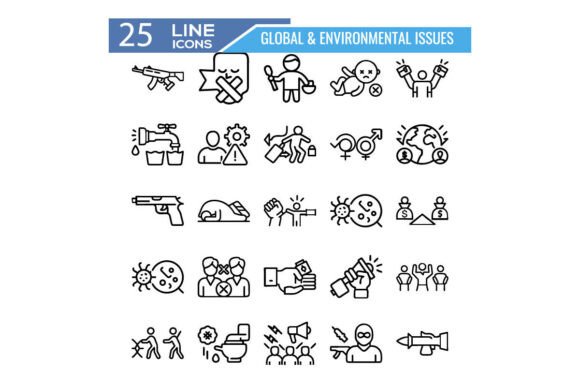
For environmental campaigns, the outline acts as a roadmap. It guides the creation of visuals, such as the modern and minimal Global Environmental Issues Outline Icon Set, which includes 25 impactful icons. These icons can be used to represent topics like climate change, biodiversity loss, and waste management, making it easier to convey messages visually.
Businesses and organizations also benefit from this structure. When developing a corporate social responsibility report, the outline helps identify areas where the company can make a positive impact. It also supports the integration of sustainability into product design, marketing strategies, and operational practices.
Scenarios Where the Outline Makes a Difference
Consider a school project on environmental science. Teachers can use the outline to guide students through different topics, ensuring that each lesson builds on the previous one. The accompanying icon set adds a visual element that keeps students engaged and helps them remember key concepts.
In the nonprofit sector, the outline is invaluable for creating compelling content. Whether it's a blog post, a social media campaign, or a printed brochure, the structured approach ensures that the message is clear and consistent. The icons can be used to highlight specific issues, making the content more accessible to a broader audience.
Event planners working on eco-friendly conferences or workshops can use the outline to design agendas that cover relevant topics. By incorporating the icon set, they can create signage, presentations, and promotional materials that align with the event's theme and message.
How Different Users Benefit from the Outline
Environmental professionals might use the outline to develop training modules or policy briefs. It allows them to present data in a logical sequence, making it easier for stakeholders to understand and act upon. The icon set complements this by offering a visual reference that can be used in reports, slides, and digital content.
Designers and developers can integrate the outline into their work to ensure that their projects are both informative and aesthetically pleasing. Whether creating a website, mobile app, or interactive map, the outline provides a framework for organizing content. The scalable vector format of the icon set ensures that visuals remain sharp and professional across different platforms and screen sizes.
Individuals interested in personal sustainability efforts can also find value in the outline. It helps them track progress, set goals, and stay informed about the latest developments in environmental science. The icons can serve as reminders or motivators, encouraging users to adopt eco-friendly habits in their daily lives.
Key Considerations Before Using the Outline
Before applying the Global Environmental Issues Outline, it's important to consider the target audience. What do they already know? What are their interests and concerns? Tailoring the content to the audience ensures that the message resonates and leads to meaningful engagement.
Another consideration is the context in which the outline will be used. Is it for a short presentation, a long-term project, or a public campaign? The structure may need to be adjusted based on the purpose and timeframe. For example, a quick infographic might focus on a few key issues, while a detailed report could cover all 25 topics in the icon set.
Additionally, users should evaluate the resources available. Creating high-quality content requires time, expertise, and tools. The outline simplifies the process, but it's still important to allocate enough resources to ensure accuracy and effectiveness. This includes researching reliable sources, consulting experts, and testing the content with a sample audience.
Strengths and Limitations of the Outline
The Global Environmental Issues Outline is a powerful tool because it offers clarity and consistency. It helps users avoid information overload by breaking down complex topics into manageable sections. This makes it ideal for educational settings, public outreach, and business applications.
However, the outline is not a one-size-fits-all solution. It works best when combined with other resources and perspectives. For example, while the icon set provides a visual representation of key issues, it doesn't replace in-depth analysis or local context. Users should supplement the outline with additional research and real-world examples to provide a more comprehensive picture.
Another limitation is that the outline focuses on broad categories rather than specific solutions. While this is useful for general understanding, it may not address the unique challenges faced by different communities or industries. Customization and adaptation are often necessary to make the content more relevant and actionable.